
Gut Health Supplement Interactions: Medications and Foods to Avoid
The Science Behind Probiotic Supplement Interactions
Each morning, countless health seekers wash down their expensive capsules with scalding coffee. They have no idea this quick habit instantly scalds and kills the delicate microscopic cultures. Over the years, I watched well-meaning patients spend fortunes on their digestive health, only to see zero progress because of a simple timing error.
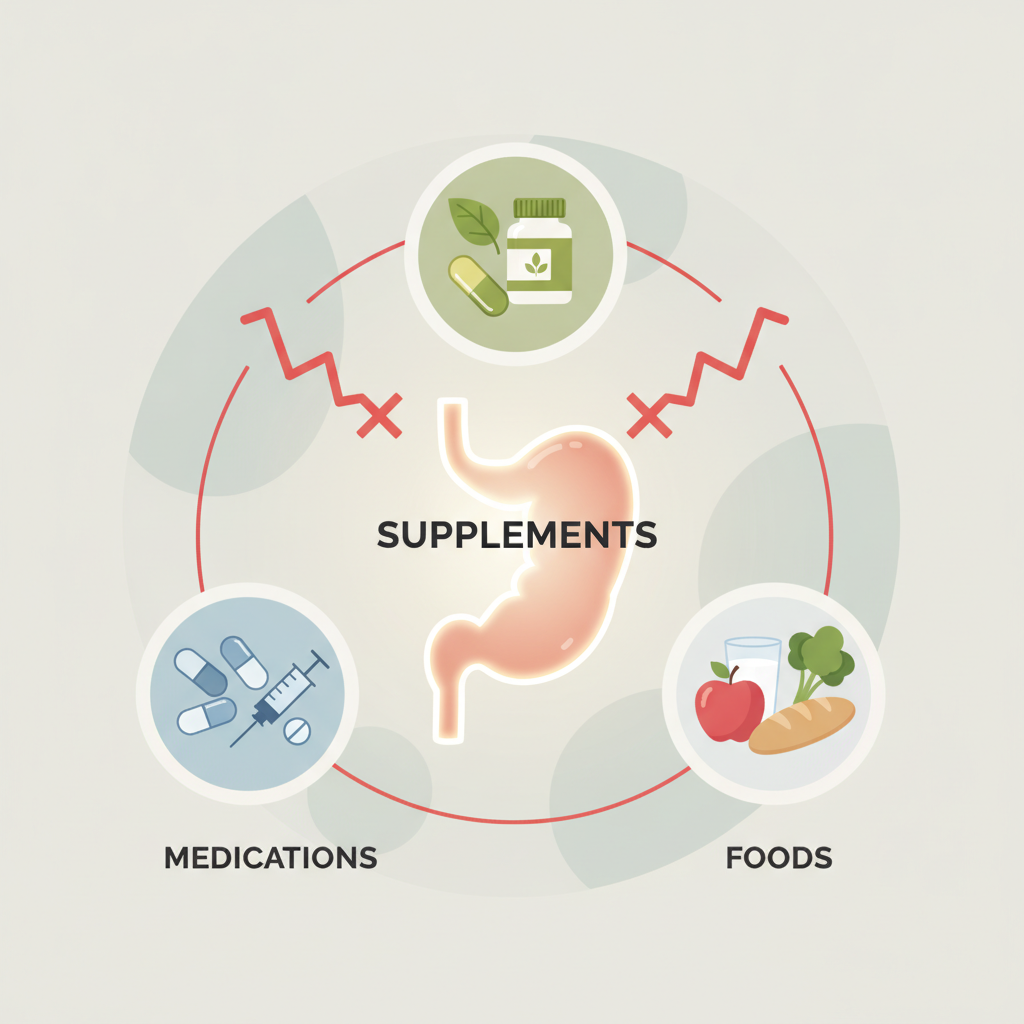
Understanding probiotic supplement interactions is key to guarding your digestive system and your hard-earned cash.
Navigating wellness takes more than grabbing a highly-rated bottle from the pharmacy shelf. Success hinges on knowing how these fragile organisms react when they meet other foods and drugs in your stomach. We will explore common gut supplement side effects, chart the perfect schedule for your daily doses, and look closely at how bacteria survive alongside medical prescriptions.
In my early years as a clinical nutritionist, I watched in frustration as dozens of clients felt worse after starting their new regimens. Instead of feeling lighter and more energized, they suffered from intense, painful bloating. This troubling pattern proved that everyday habits and pharmacy prescriptions can completely change how helpful bacteria behave.
The Delicate Balance of Probiotics and Antibiotics
Putting tiny microbes up against heavy-duty prescription drugs is a true battle for survival. Antibiotics are designed to clear out bacteria without discrimination, destroying both dangerous invaders and your gut’s natural allies. Taking a capsule right alongside a dose of penicillin means the medicine wipes out the friendly organisms before they even reach your intestines.
Picture a forest fire sweeping through a valley, and imagine your daily capsules as fragile green sprouts. Sowing fresh seeds while the flames rage is a waste of time and money. Studies show that spacing out these doses is the only way to keep the microbes alive.
To manage this delicate dance safely, you must build a strict time buffer into your daily routine. Doctors recommend waiting at least two or three hours after your antibiotic dose before swallowing your live bacteria. This brief delay lets the drug concentration in your stomach drop, giving the new microbes a fair chance to anchor themselves.
How Prescription Drugs Trigger Probiotic Drug Interactions
Antibiotics are not the only pills that disrupt your internal ecosystem. Common heartburn medications reduce stomach acid, raising the pH level. This shift in pH can cause enteric-coated capsules to dissolve prematurely in the stomach rather than the intestines.
I once worked with a patient taking strong immune-suppressing drugs for an autoimmune condition. For them, introducing billions of live bacteria was not just a waste of money, it was outright dangerous. Their weakened defenses could not manage the sudden influx of new strains, triggering a severe inflammatory flare.
Several common pills require careful timing to prevent bad reactions. Knowing how these chemicals interact inside your body keeps you safe from unwanted trouble. The list below outlines the main drug classes that require extreme caution.
- Immunosuppressive drugs: These medicines lower your natural defenses, which might let even friendly bacteria multiply without control and trigger dangerous infections.
- Proton pump inhibitors: These change your stomach’s natural acid levels, causing protective capsule shells to melt too early before reaching the colon.
- Chemotherapy agents: These harsh drugs weaken the protective lining of your gut, making it easier for bacteria to leak directly into your bloodstream.
- Antifungal prescriptions: These can destroy supportive yeast strains like Saccharomyces boulardii, making your daily dose completely useless.
Spotting these hidden connections keeps you safe and helps your daily routine work alongside medical treatments. Always talk to your doctor before adding live cultures to your prescription pill schedule.
Dietary Landmines: Mixing Probiotics with Food and Drinks
What you eat and drink with your capsules can turn your gut into rich soil or a barren desert. Hot drinks present the most immediate danger to live strains. Temperatures over 115 degrees Fahrenheit quickly warp the proteins inside helpful microbes, leaving them completely dead.
Picture trying to grow a fragile orchid by watering it with boiling tea. Acidic juices and fizzy sodas can damage live bacteria directly due to their high acidity. This harsh environment can destroy the cell walls of unprotected strains before they reach your lower digestive tract.
Alcohol is another major enemy of healthy microbes. Ethanol acts as a swift disinfectant, destroying bacteria the second they touch in your stomach. Having a glass of wine with dinner wipes out your expensive pills before they ever have a chance to settle.
| Dietary Element | Impact on Gut Supplements | Safe Alternative |
|---|---|---|
| Hot Coffee or Tea | Destroys living bacteria immediately through heat shock. | Sip warm or room-temperature water instead. |
| Grapefruit Juice | High acidity can destroy live, unprotected bacteria. | Wash down capsules with filtered spring water. |
| Alcoholic Beverages | Wipes out bacterial cell walls on contact. | Space out your drinks by at least four hours. |
| Processed Sugars | Feeds bad yeast strains and causes sudden swelling and gas. | Choose prebiotic fibers like chicory root instead. |
To keep as many friendly bacteria alive as possible, you must build a welcoming home in your gut. This means avoiding harsh drinks and irritating foods around the time you take your dose.
Perfect Timing: When to Take Gut Supplements for Maximum Viability
Timing is what separates a complete waste of money from a thriving digestive system. To figure out when to take gut supplements, we have to look at how your stomach acid changes throughout the day. Your stomach is highly acidic when empty, but the pH temporarily rises and becomes less acidic when you eat.
Getting through the stomach is like a spacecraft braving a fiery atmosphere. The capsule needs to slip through the acid barrier during a quiet moment to survive. Studies show that strains like Lactobacillus and Bifidobacterium do best when taken half an hour before you eat.
Taking your capsule with a little healthy fat offers an extra layer of protection. The fat coats the bacteria and slows down digestion, allowing a smoother path to your lower gut. Keeping a steady schedule ensures the tiny travelers arrive safely and start growing.
- Swallow your capsules thirty minutes before breakfast to ensure rapid transit through the stomach before acid levels rise during digestion.
- Eat prebiotic fibers with your dose to feed the incoming friendly strains immediately.
- Skip hot food and drinks for twenty minutes after taking your daily capsule.
- Stay relaxed with soil-based strains since their tough outer shells survive easily on full or empty stomachs.
Identifying and Managing Gut Supplement Side Effects
Pouring billions of new microbes into an established inner world always causes a little temporary chaos. Many people mistake this initial shift for a bad reaction and throw their bottles away too soon. Learning to tell the difference between normal adjustments and dangerous gut supplement side effects is key to getting real results.
Think of this transition like remodeling a kitchen. Before everything looks beautiful, you have to deal with dust, noise, and piles of old plaster. This cleanup process inside your body often feels like minor physical discomfort.
Mild gas and slight digestive changes are perfectly normal during the first week. These issues often mean bad bacteria are dying off as the new, friendly strains take over their territory. True bad reactions are different and require you to stop immediately.
- Sharp, painful stomach cramps that last longer than two weeks without getting better.
- Sudden skin rashes or hives that show you are allergic to a strain or filler.
- Constant brain fog or headaches, which happen when certain histamine-producing strains bother sensitive systems.
- Severe, nonstop diarrhea that leaves you feeling drained and dehydrated.
If you notice any of these severe warning signs, stop taking the pills right away and call your doctor. Fixing this usually means switching to a simple single-strain product or cutting your dose in half so your body can adapt slowly.
A Blueprint for Mixing Probiotics with Medications Safely
Building a safe routine requires a steady, organized approach to your morning habits. We need to treat our digestive health with the exact same care we give to serious prescriptions. This means tracking everything, from the warmth of your morning tea to the hours between your pills.
Begin by keeping a simple notebook to track what you eat, when you take your doses, and how you feel. This quick habit helps you spot trends and fix your schedule before any real trouble starts. Guarding your inner world is a journey of small, daily choices that protect your microscopic allies.
To protect your long-term success, remember these simple guidelines. Keep your capsules at least two hours away from antibiotic medications so the live bacteria can survive. Skip scalding drinks and sour juices for half an hour before and after taking your dose.
Take your capsules thirty minutes before eating a little healthy fat to ease their journey through stomach acid. Watch your body for minor adjustments, but stop immediately if you notice serious allergic reactions. Keeping your gut happy is a precise art that requires careful attention to everything you swallow.