
Histamine Intolerance and Probiotics: Choosing the Right Low-Histamine Strains
The Unexpected Storm and the Search for Low Histamine Probiotics
The heat crept up her neck, settling into her ears as a fierce scarlet flush. Her heart hammered wildly against her ribs, mimicking a sprint while she sat frozen in her kitchen chair. This terrifying wave broke over a client of mine shortly after she finished a bowl of home-fermented sauerkraut.
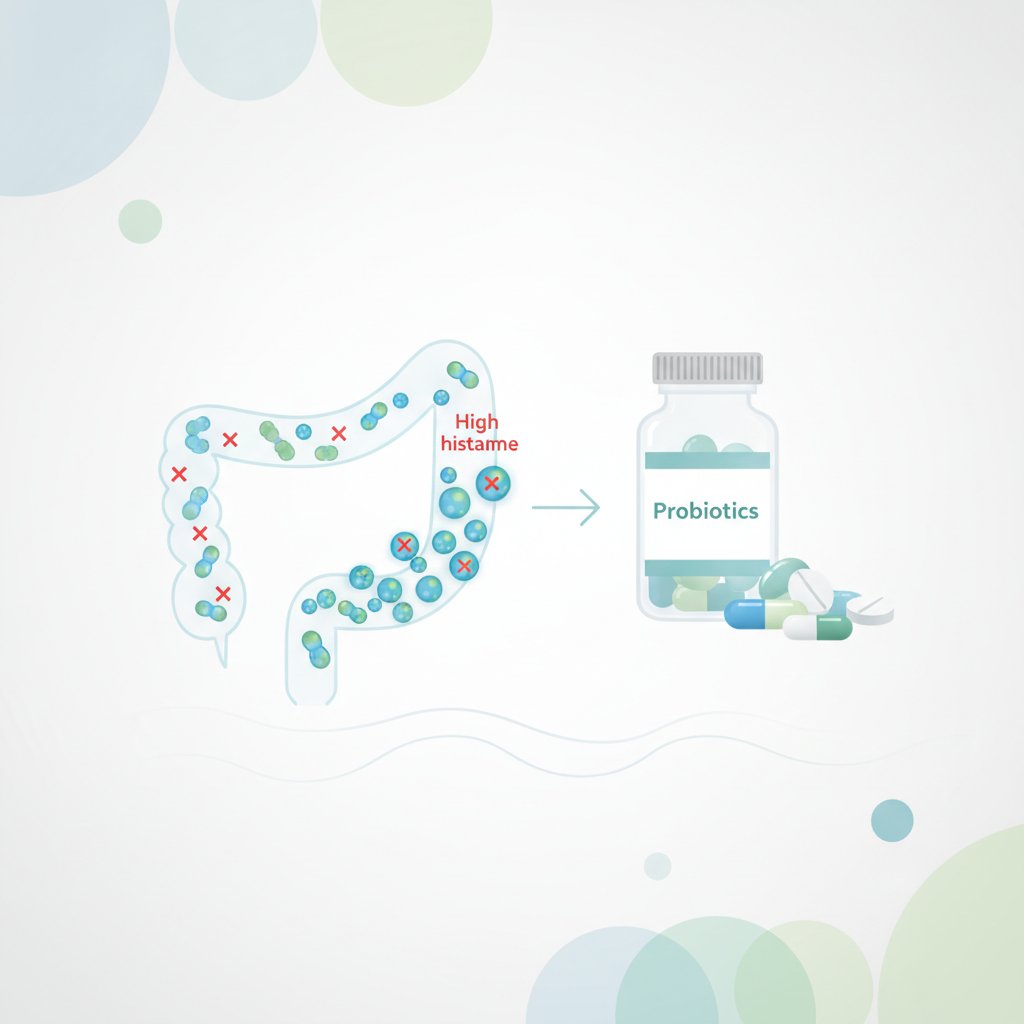
This guide maps out how specific bacterial strains affect your internal chemistry. It offers a clear path to choosing low histamine probiotics to mend your gut without sparking a systemic wildfire.
We look closely at how low histamine probiotics can soothe a fired-up immune system and safely restore your gut ecology. For months, this client had followed classic wellness trends to mend her digestion. She drank craft kefir, ate fermented greens, and swallowed high-dose supplements every morning.
Instead of finding relief, her body revolted. Hives flared across her skin, sudden panic kept her awake at night, and a thick mental fog made her daily work impossible. Her struggle highlights a cruel irony where classic recovery foods turn into internal triggers.
This guide untangles the knotty connection between intestinal microbes and biological amines. You will discover which specific strains assist your recovery and how to introduce low histamine probiotics to reclaim your energy.
During her first visit, she set a cooler on my desk packed with high-end powders and organic ferments. Her troubles had started with minor bloating but snowballed into full-body distress once she began her aggressive recovery routine. Her days started with a green drink spiked with common bacterial powders, followed by midday bone broths and cultured vegetables.
Half an hour after eating, her skin would itch and prickle, her nose would drip, and a heavy exhaustion would cloud her mind. She felt utterly let down by her own biology and confused by why standard health foods were failing her.
We began by inspecting the tiny print on her supplement bottles. Her premium capsules contained massive doses of Lactobacillus casei and Lactobacillus bulgaricus. These particular microbes are aggressive producers of biogenic amines.
Her careful routine was drowning her tissues in histamine, quickly overwhelming her natural drainage pathways. This discovery changed everything. We swept away the fermented foods and shifted her focus to low histamine probiotics.
Within a fortnight, her skin calmed down completely. Her sleep restored its natural rhythm, and the constant feeling of physical panic vanished.
Understanding Histamine Overload and the Need for Low Histamine Probiotics
Picture your body as a simple rain barrel. Histamine drips into this container from foods, pollen, and your own immune cells. At the bottom sits a drain plug representing your clearing enzymes, mainly diamine oxidase (DAO) in your digestive tract and HNMT in your tissues.
When the incoming stream moves faster than the drain can empty, the barrel spills over. This spillover causes the chaotic mix of symptoms people face, from skin welts and migraines to gut cramps and a racing heart.
Many widely sold bacterial strains act as extra hoses pouring water into that full barrel. These microbes carry a specific gene that transforms histidine from your food directly into active histamine inside your gut.
A 2011 study in the journal Applied and Environmental Microbiology showed that standard fermentation starters like Lactobacillus delbrueckii produce high levels of histamine. Flooding your gut with these when your DAO enzymes are low leads to persistent inflammation. Swapping them out for low histamine probiotics is a vital step toward reclaiming your health.
A balanced gut ecosystem should keep your histamine levels steady. However, when aggressive, amine-producing microbes take over, your gut lining weakens.
This leakage lets histamine and various toxins escape straight into your bloodstream. The leak triggers mast cells everywhere to dump more histamine, locking you in a painful loop. Breaking this cycle requires a conscious pivot away from bad strains toward low histamine probiotics.
Navigating the Strain Maze to Find Low Histamine Probiotics
The microbial world is highly specialized. Two strains from the exact same family can behave in completely opposite ways. This variation is why generic probiotic bottles pose a hidden risk to sensitive people.
While certain lactobacilli generate histamine, other specific strains help steady your immune system.
We must zero in on low histamine probiotics that actively break down the amine or leave it entirely alone. This careful selection lets us rebuild your gut flora without setting off your mast cells. According to scientific research on mast cell stabilization, select microbes play a key role in calming allergic reactions.
Lactobacillus rhamnosus GG stands out as a heavily researched strain for allergy and amine issues. This microbe lowers the expression of H1 histamine receptors and keeps mast cells quiet. It operates like a shield, stopping environmental triggers from setting off widespread inflammation.
Another stellar group includes specific bifidobacteria, which do not produce amines and support your gut lining. These microbes work quietly to patch the intestinal wall, preventing irritating compounds from leaking into your bloodstream.
Key Bacterial Strains for Managing Histamine Sensitivity
To help you spot these supportive microbes, we gathered a list of the most helpful strains for handling histamine issues:
- Bifidobacterium infantis: This strain breaks down histamine in the gut while strengthening the tight junctions of your intestinal wall.
- Bifidobacterium longum: A well-studied mast cell stabilizer, this microbe helps lower IgE antibodies and soothes allergic responses.
- Lactobacillus rhamnosus GG: This strain dials down histamine receptors and aids the production of calming, anti-inflammatory compounds like IL-10.
- Bifidobacterium breve: It offers strong protection for the mucosal barrier, stopping harmful bugs from taking over and producing amines.
- Lactobacillus plantarum: Certain strains of this species produce amine-clearing enzymes, helping sweep excess histamine out of your digestive tract.
Adding these specific strains to your routine helps restore the microbial diversity missing in people with chronic food sensitivities. As these friendly bacteria settle in your colon, they generate short-chain fatty acids like butyrate.
Butyrate feeds the cells lining your colon, speeding up repair and lowering local inflammation. This structural mending helps your body produce more of its own diamine oxidase, restoring the natural drainage of your metabolic bucket.
Quick Reference: Histamine-Producing vs. Low Histamine Probiotics
The table below shows the differences between common bacterial strains to help you make safe choices for your digestion.
| Bacterial Strain Name | Histamine Impact in the Gut | Recommended Action for Patients |
|---|---|---|
| Lactobacillus casei | Actively produces histamine and biogenic amines | Avoid completely during healing phases |
| Lactobacillus bulgaricus | High producer of histamine starter cultures | Avoid completely during healing phases |
| Bifidobacterium infantis | Degrades histamine and strengthens gut barrier | Highly recommended for daily support |
| Lactobacillus rhamnosus GG | Downregulates H1 receptors and stabilizes mast cells | Highly recommended for daily support |
| Bifidobacterium longum | Calms systemic allergic responses and mast cells | Highly recommended for daily support |
The Vital Role of D-Lactate Free and Low Histamine Probiotics
Many people who struggle with histamine issues also deal with Small Intestinal Bacterial Overgrowth, or SIBO. In an imbalanced gut, some bacteria make too much d-lactate, a specific form of lactic acid. Unlike l-lactate, which your body processes easily, d-lactate is cleared very slowly.
When these d-lactate producers multiply, the compound builds up in your blood, causing mild metabolic acidosis. This chemical shift is a major cause of the heavy brain fog, physical fatigue, and mental friction felt by many gut patients.
The link between d-lactate and histamine is close, since both issues often grow from the same bacterial imbalance. Many standard supplements contain strains that produce both compounds, double-hitting your nervous and immune systems.
Choosing d-lactate free and low histamine probiotics is a vital step if you experience brain fog alongside your digestive pain. Avoiding heavy d-lactate producers like Lactobacillus acidophilus helps protect your brain from metabolic exhaustion while healing your gut.
Our clinical work shows that focusing on bifidobacteria is the safest way to avoid both histamine and d-lactate buildup. Bifidobacteria produce l-lactate and acetate, which are highly supportive of the gut and easy for your body to handle.
These organic acids lower your colon’s pH, making it hostile to harmful, histamine-making microbes. This natural acid shift restores balance to your microbiome without taxing your liver and kidneys.
Selecting the Best Gut Supplements for Low Histamine Probiotics
Walking down the supplement aisle can feel overwhelming, especially when one wrong pick can trigger a multi-day flare. Most retail formulas are made for the general public, containing a broad mix of strains for basic digestion. These recipes almost always contain histamine-producing strains and prebiotics like inulin.
While prebiotics feed healthy guts, they ferment too quickly in a damaged system, causing instant mast cell reactions and painful gas. To find the safest supplements, look past the bold claims on the front label and focus strictly on verified low histamine probiotics.
You have to act like a detective, scanning the back of the bottle for hidden triggers and checking the exact strain codes. Trustworthy brands list specific codes, like Bifidobacterium longum BB536, instead of just the broad species name.
This detail is necessary because different strains within the same family have vastly different effects on your body. To protect your gut, follow a strict selection process when shopping for high-quality supplements.
A Checklist for Choosing Clean Gut Supplements
- Make sure the product is completely free of prebiotics like inulin, FOS, chicory root, or larch arabinogalactan.
- Search for single-strain or targeted formulas that explicitly leave out Lactobacillus casei, Lactobacillus bulgaricus, and Lactobacillus reuteri.
- Choose brands certified allergen-free, with no hidden dairy, gluten, soy, or yeast.
- Select products that use acid-resistant, delayed-release capsules to protect the bacteria from stomach acid until they reach the lower gut.
- Check that the maker provides third-party lab reports confirming the purity, strength, and strain identity of the batch.
By sticking to these strict rules, you shield your delicate system from accidental flare-ups. A clean supplement profile allows your immune system to finally step down from its high-alert state.
This physical rest window is exactly what your gut lining needs to mend its tight junctions and start making its own histamine-clearing enzymes.
A Guided Protocol for Introducing Low Histamine Probiotics
Once you have a high-quality formula, how you start taking it matters just as much as the product itself. A highly sensitive immune system views any sudden change as a threat, which can trigger inflammation even from helpful strains. The golden rule of introducing low histamine probiotics is to start with a tiny micro-dose and proceed with extreme patience.
This slow approach lets your immune system and microbiome adapt gradually, lowering the chance of a flare-up. We suggest starting with a tiny fraction of the standard dose, especially if you have been sick for a long time.
You can do this by pulling a capsule apart and mixing a tiny pinch of the powder into water or onto a low-histamine meal. This food buffer protects the delicate bacteria from stomach acid while slowing down their entry into your system.
Keep a detailed daily log to track your physical and emotional reactions during this startup phase. To ensure a safe transition, follow a clear, gradual schedule.
Step-by-Step Micro-Dosing Protocol
- Day 1 to Day 3: Take a micro-dose of about one-eighth to one-quarter of a capsule mixed in water once a day.
- Day 4: Check your journal, looking closely at skin redness, heart rate, sleep quality, and gut comfort.
- Day 5 to Day 7: If you feel fine, increase the daily amount to half a capsule.
- Week 2: Slowly build up to a full capsule daily, keeping a close eye on how your body responds.
- Week 3 and Beyond: Stay at the full daily amount to let the helpful strains grow and support your gut wall.
If your symptoms flare up at any point, do not panic. Simply pause the routine for a day or two until your body calms down, then start again at your last comfortable dose.
This slow pace respects your body’s current physical limits and offers a lasting path to long-term gut health. Consistent, gentle exposure is the secret to calming an overactive immune system.
Whole-Body Recovery Alongside Low Histamine Probiotics
Rebuilding your microbiome is a deep journey, but supplements alone cannot carry the whole load. For lasting relief, we must address the lifestyle habits and food choices that fill up your histamine bucket. A temporary low-histamine diet is a necessary companion to your probiotic routine, since it lowers the daily amount of incoming amines.
Focus on fresh meats, freshly caught fish, non-citrus fruits, and quick-cooking vegetables to keep your bucket from spilling over. Early in your recovery, taking a high-quality diamine oxidase enzyme supplement before meals can offer fast relief.
This enzyme works in your small intestine to break down histamine in food before it can enter your bloodstream. This physical support lightens the load on your immune system, helping low-histamine bacteria settle in more easily.
Over time, as your gut lining mends and your own DAO production climbs, you will need less outside help. Stress management is another vital piece of this whole-body approach that people often overlook.
Constant stress triggers your mast cells to open up, dumping a flood of histamine and inflammatory chemicals straight into your tissues. Adding daily mindfulness, gentle breathing, or restorative movement can deeply calm your nervous system.
This shift from fight-or-flight to rest-and-digest is the ultimate spark for deep cellular healing.
Reclaiming Balance with Low Histamine Probiotics
Navigating histamine issues requires shifting away from generic gut advice to a highly tailored, strain-specific plan. Standard wellness practices often fail because they ignore the metabolic differences between bacterial strains. By choosing low histamine probiotics, you actively support your body’s natural clearing pathways and steady your immune system.
Keep these primary practical takeaways in mind as you move forward on your healing journey. With the correct strains and a patient, structured approach, you can rebuild your gut microbiome and reclaim your health.
Practical Takeaways for Your Healing Journey
- Avoid standard multi-strain probiotics that contain histamine-producing species like Lactobacillus casei and Lactobacillus bulgaricus.
- Focus on helpful bifidobacteria and specific lactobacilli strains that break down biogenic amines and support your gut wall.
- Choose d-lactate free formulas to prevent metabolic acidosis and clear away brain fog.
- Introduce new supplements slowly using a step-by-step micro-dosing schedule to avoid overwhelming your sensitive immune system.
- Combine targeted supplements with a temporary low-histamine diet and stress reduction to help your gut heal.