
How Long Does It Take for Gut Health Supplements to Work?
Starting a fresh path toward internal balance often brings up the burning question of how long for gut supplements to work before deep, lasting changes take root. Picture a neglected backyard garden, choked by weeds and hardened by years of neglect. Scattering a handful of wildflower seeds will not change the landscape overnight because the dry soil itself demands deep conditioning, weeding, and steady, quiet nourishment.
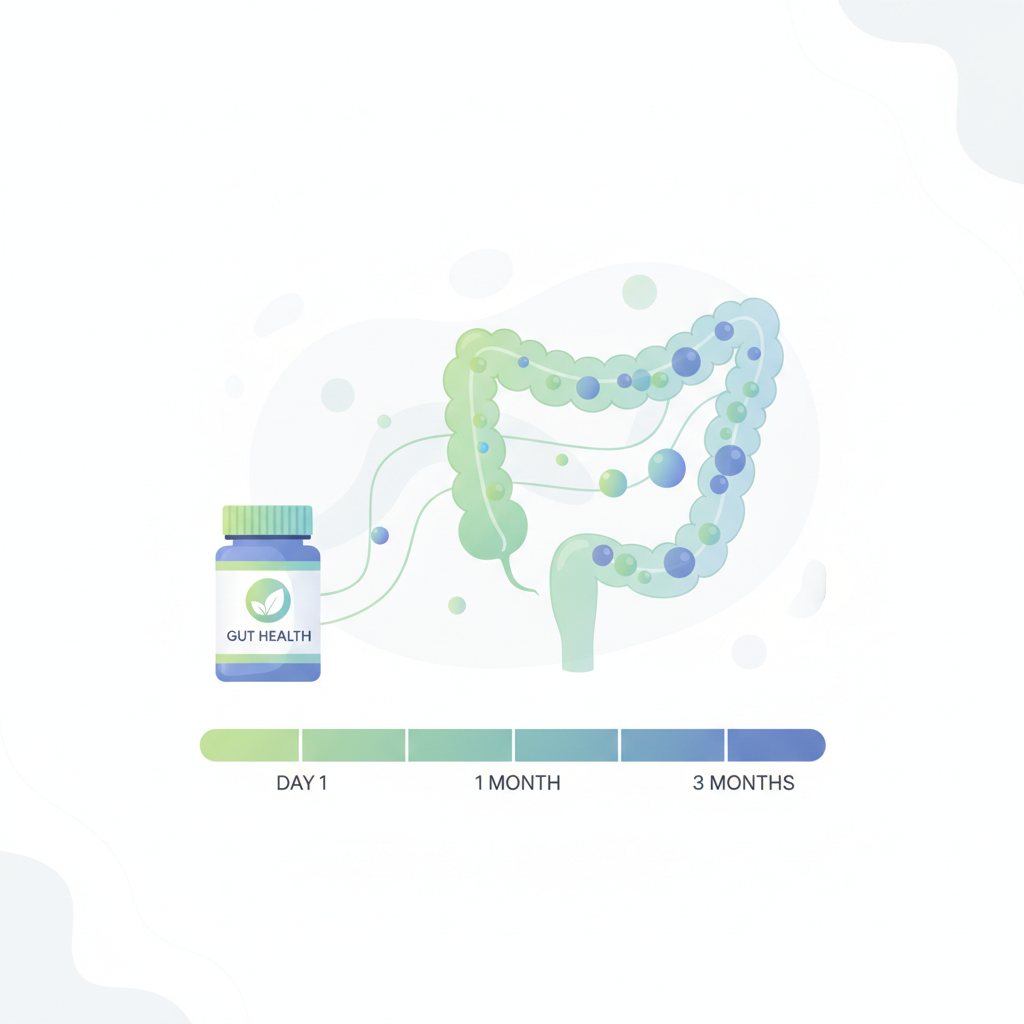
This quiet ecological struggle mirrors our inner landscape, where trillions of microscopic residents form a complex web of life. They live, fight, and cooperate in the dark, damp folds of our inner being.
Most people swallow their first capsule hoping for an instant miracle, expecting their body to rewrite its entire story by morning. Finding the true timeline means ignoring flashy marketing bottles and focusing instead on the slow, steady clock of cellular renewal.
Not long ago, a client named Sarah walked into our clinic, exhausted after carrying three years of constant bloating and heavy fatigue. Her mindset reflected the modern rush, hoping a single capsule of active microbes would sweep away her troubles in forty-eight hours. Her path reveals the true gut health recovery time, proving that lasting shifts in our internal ecosystem require patience and daily devotion.
By monitoring her body’s chemistry, we watched how her tissues gradually integrated these tiny helpers over several weeks. Her steady progress serves as a quiet map for anyone ready to begin a similar path toward inner balance.
Factors Determining How Long for Gut Supplements to Work
Every body possesses a unique inner climate that dictates how fast it welcomes new help. The current state of the delicate mucosal barrier dictates how easily friendly microbes can claim territory along the intestinal walls. People dealing with deep, long-standing imbalances must prepare for a longer walk than those fixing a brief, minor disturbance.
Daily meals play a groundwork role in this biological clock. Supplements cannot thrive in a nutritional desert, as a diet packed with diverse plant fibers offers the vital fuel these new microbes need to survive. Swallowing capsules while living on highly processed food is like scattering delicate seeds onto hot concrete.
The build of the capsule itself dictates the speed of your progress. Well-made, acid-resistant shells shield delicate strains from the stomach’s fiery acid, ensuring they reach the deep colon alive. Cheap, poorly designed alternatives often melt away too early, destroying the active cargo before it ever reaches the destination.
- The starting damage of the mucosal tissue and the depth of the microbial imbalance.
- Daily food choices, especially the presence of prebiotic fibers and traditional fermented foods.
- The colony-forming units (CFUs) and viability of the selected strains.
- Personal stress levels, which actively shape physical motility and local immune defenses.
Tracking the Probiotic Timeline and Absorption Rates
The opening week of this routine marks an invisible struggle within the dark turns of the digestive tract. During these first seven days, incoming strains scramble to find physical real estate along the slick mucosal lining. This settling-in phase can sometimes cause brief gas or bloating as the newcomers push aside the old, stubborn residents.
A major study from 2018 published in the journal Cell showed that even transient strains, which do not permanently colonize the gut, can still influence the local environment and release helpful compounds. These secretions lower the local acidity, making the neighborhood unfriendly to hostile microbes. This quiet shift marks the true start of the healing timeline, setting the stage for deep repair.
By the third and fourth weeks, the newly settled colonies begin to guide the local immune cells. The gut-associated lymphoid tissue (GALT), where the body keeps its defense forces, starts receiving soothing signals from the balanced flora. During this phase, many people notice a real drop in full-body inflammation and daily digestive distress.
- Days 1 to 7: Active microbial competition and early settling of the mucosal layer.
- Days 8 to 21: Balancing of local acidity and a drop in hostile bacterial populations.
- Days 22 to 60: Better nutrient uptake and clear improvements in full-body immune responses.
| Phase | Timeline | What is Happening Inside |
|---|---|---|
| Phase 1: Colonization | Days 1 – 7 | New strains seek a home, sometimes causing brief, mild bloating. |
| Phase 2: Balancing | Days 8 – 21 | Acidity drops, neutralizing hostile invaders and reducing inflammation. |
| Phase 3: Whole-Body Relief | Days 22 – 60 | Better nutrient uptake, stronger defense responses, and fresher energy levels. |
Recognizing the Key Signs Your Gut Is Healing
Full-body recovery shows itself through quiet physical changes that build up over time. One of the earliest clues of healing is a predictable, easy bathroom routine free from sudden urgency or heavy gas. Watching your digestive tract change from an unpredictable source of worry into a quiet, smooth system is a massive milestone.
Another clear sign of progress is a lasting rise in daily stamina. The microflora synthesizes vital B and K vitamins and influences the production of neurotransmitters like serotonin. As the delicate intestinal lining heals, nutrient uptake rises, directly fueling cellular engines throughout your limbs.
Clearer skin and lighter thoughts also act as reliable outer signs of inner mending. The gut-brain and gut-skin axes are active communication pathways that react directly to microbial balance. A drop in circulating toxins means the liver and skin face less inflammatory burden, leading to a bright complexion and sharp focus.
Establishing a Realistic Gut Health Recovery Time
Securing lasting structural shifts inside requires a steady commitment over several months. While the lining of the gut replaces its outer cells every few days, rebuilding the deeper tissue is a slow craft. For those recovering from severe leaks or heavy antibiotic use, the realistic gut health recovery time usually stretches between twelve and sixteen weeks.
In our work, we see that daily routine is the single most vital factor. Skipping days breaks the colonization rhythm, giving opportunistic bugs a chance to reclaim lost ground. Keeping a steady daily habit guarantees a constant flow of helpful compounds to feed the quiet work of cellular repair.
Matching your supplement routine with simple daily habits speeds up this natural healing path. Getting seven to eight hours of deep sleep allows your resting nervous system to focus its energy on mending tissues. Keeping mental stress low is just as important, since chronic worry chemicals directly weaken the seals of the intestinal barrier.
- Keep a strict daily schedule to avoid gaps in microbial growth.
- Eat at least thirty different plant foods each week to feed diverse microflora.
- Practice daily calming habits like slow breathing to support vagus nerve tone.
- Limit alcohol and fake sweeteners, which damage friendly bacterial colonies.
Walking the path of inner restoration means trading the urge for quick fixes for the slow, rewarding work of natural cultivation. The answer to how long for gut supplements to work depends heavily on your unique starting point, capsule quality, and daily habits. While early bacterial shifts happen in the first week, deep tissue repair and immune balancing require a steady commitment of three to four months.
Noticing tiny improvements in your energy, skin, and stomach comfort keeps you going through the quiet weeks. Trusting this natural clock eventually rewards you with a strong, smooth system that anchors your whole-body vitality.